Five Common Mistakes First-Time Visitors Make When Booking a Coastal Guesthouse
Coastal guesthouses tend to be small. Eight rooms, a terrace, a family who has run the place for thirty years, a view that photographs beautifully at seven in the morning. That intimacy is the whole appeal, and it is also why a booking made in five minutes on a phone can go wrong in ways that only become clear when you are standing at the door with a suitcase and no idea where to park.
None of the mistakes below are dramatic. They are ordinary oversights, and each one has a fix that costs a short email or a careful read. Here are the five that come up most often, plus what to do instead.
1. Choosing a Room From the Lead Photograph
Every guesthouse has one room that photographs like a postcard, and it is almost always the one at the top of the booking page. The wide shot with the open shutters, the linen curtains lifting, the sea beyond the balcony: it may be the suite, it may be the room you are actually reserving, and it may not. Before you book, ask which room the photo shows and whether it belongs to the category you are paying for.
Sea view, sea glimpse, sea suggestion
Ask for a photograph taken from inside the room, looking out with the window frame visible. That single image tells you more than a dozen staged shots: how much of the water you actually see, whether the window faces the bay or the car park behind it, and how much light the room gets in the afternoon. Then ask what stands between the room and the water. A road. A strip of parking. A restaurant terrace that stays busy until midnight in August. None of these are deal-breakers; all of them are things you would rather know now.
Two more questions worth adding: which floor is the room on, and is there a lift? In older coastal buildings, a "sea view" on the fourth floor with no lift is a very different proposition from the same view on the first.
2. Treating the Cancellation Policy as Small Print
Coastal travel is more fragile than city travel. Ferries get cancelled, roads close, a flight lands four hours late. A policy you skimmed in March is the thing you will be arguing about in July, so read three details properly: the deadline for free cancellation, the penalty after that deadline, and how you are expected to cancel, because a phone call to a reception desk is not always enough in writing.
Check the deadline in the property's own time zone, and check whether it is a date or a time of day. "Free cancellation until 14:00 on 3 June" is precise. "Three days before arrival" is not, and a rushed booking page will often present it as the latter. If your trip depends on a ferry or a connecting flight, the flexible rate is usually worth the difference; if you take the cheaper non-refundable rate, know that you are carrying the risk yourself. Travel insurance can cover some of this, and if the money matters to you, read the policy wording or take advice before you rely on it.
For direct bookings, ask the guesthouse to confirm the cancellation terms in the same email as the confirmation. It takes them a minute and removes all ambiguity later.
3. Underestimating the Last Mile
Distance in kilometres and distance in effort are different measurements on a coast. A guesthouse can be 900 metres from the station and still take twenty-five minutes with a wheeled suitcase, because the route goes up a flight of steps, through a pedestrian lane and down again. Before you book, ask for the journey in steps rather than in metres.
- Ask for the exact arrival instructions. Not the address, the instructions: which entrance, which doorbell, whether the street is open to cars at all.
- Ask where the car goes. Many historic centres restrict traffic, and parking may be a short walk away or a garage you must book ahead.
- Ask the last realistic check-in time. If the ferry you are eyeing docks at 22:40, you need to know before you book whether anyone will be there, or whether a late arrival means a key box and a set of instructions sent by message.
Ask, too, about the transfer itself. Is there a shuttle, a taxi rank at the port, a bus that runs after dark? You do not need a fixed plan, but you do need to know that the plan exists.
4. Assuming the Sea Is at the Bottom of the Garden
"Walking distance to the beach" is one of the most elastic phrases in hospitality. It can mean a two-minute stroll across a quiet lane, or fifteen minutes down a steep staircase with no shade. Ask how many minutes, whether the route involves steps, and whether the walk back is uphill. It usually is.
Then ask what kind of beach it is. Sand or pebbles, which decides whether you need beach shoes. A lido with umbrellas and sunbeds, or a free public stretch, which decides whether you need to reserve anything at all and whether beach service is part of your rate. Some coastal guesthouses have sea access from rocks and a ladder rather than a beach, which is wonderful for swimmers and less so for small children. If you are travelling with family, ask about the water's edge, the depth and the current before you picture a morning of easy paddling, and follow local signage and lifeguard advice on the day.
5. Saving the Practical Questions for Arrival
A guesthouse is a home with guests in it, which means the small practical details vary enormously from one property to the next. Ask them before you book rather than discovering them at midnight.
- Is there air conditioning, is it in every room, and is it included in the rate?
- Are there stairs to the room, and how many?
- Is the wi-fi reliable in the rooms, or only in the common areas?
- What time is breakfast served, and where?
- Are there insect screens on the windows, and is there a fan as well as air conditioning?
- Is there anywhere to wash and dry swimwear and towels?
- How soundproofed are the rooms, and is there a bar or restaurant next door?
None of these questions are awkward. Properties that host guests well are used to them and answer quickly, and the speed and care of the reply is itself useful information.
6. Booking Dates Without Checking What the Season Does
A coastal guesthouse in June and the same building in October can feel like two different businesses. Ask what will be open during your dates: restaurants, beach clubs, boat trips, the little ferry that hops along the coast. In shoulder season, some of it will be closed, which is precisely why the light is better and the village is quieter. In high season, everything is open and the village is loud until late.
It is also worth asking, plainly, whether there is building work nearby, whether a festival falls during your stay, and whether the property has a policy about quiet hours. All three affect your sleep more than the thread count does.
A Five-Minute Checklist Before You Confirm
You do not need a spreadsheet. You need one email with six clear questions, sent before you pay anything.
- Which exact room am I booking, and can you send a photo taken from inside it looking out?
- What are the cancellation terms, including the deadline and the time zone?
- How do I reach you from the port, station or airport, and what is the latest sensible arrival time?
- How far is the beach in minutes and steps, and what is it like when I get there?
- Is there anything about the building or the room I should know: stairs, air conditioning, noise, parking?
- What is open in the village during my dates?
Save the reply. Put the arrival instructions in a place you can reach without a signal, and note the check-in window in your calendar with the local time attached. Do that, and the first thing you will notice on arrival is the view, not the logistics.
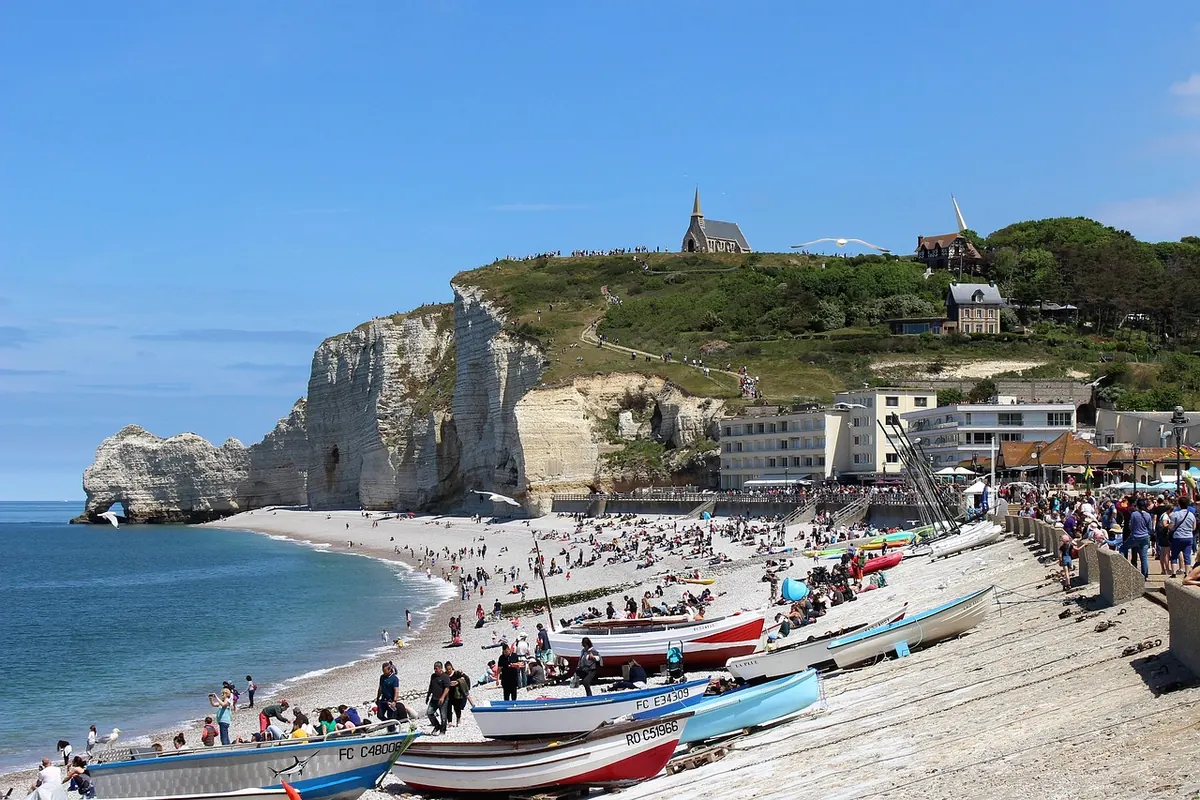
Photo: geralt / Pixabay